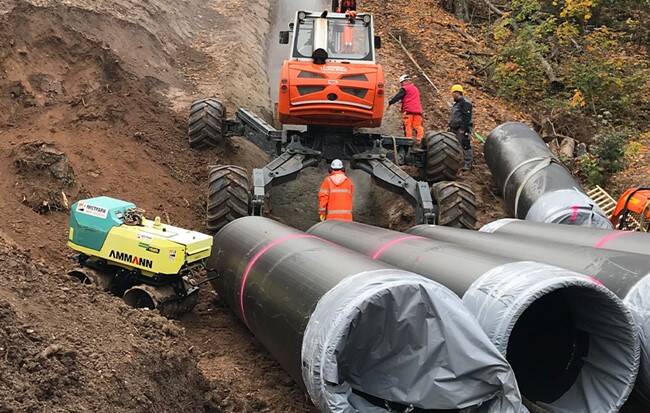






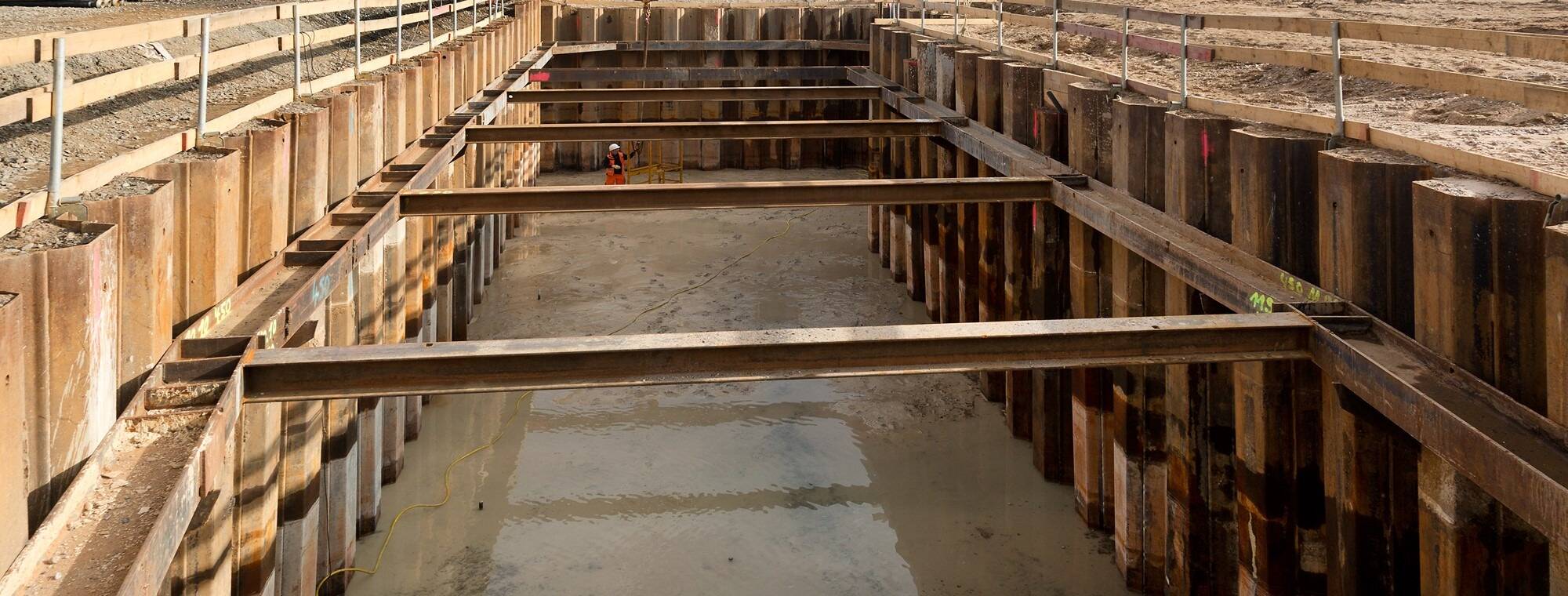
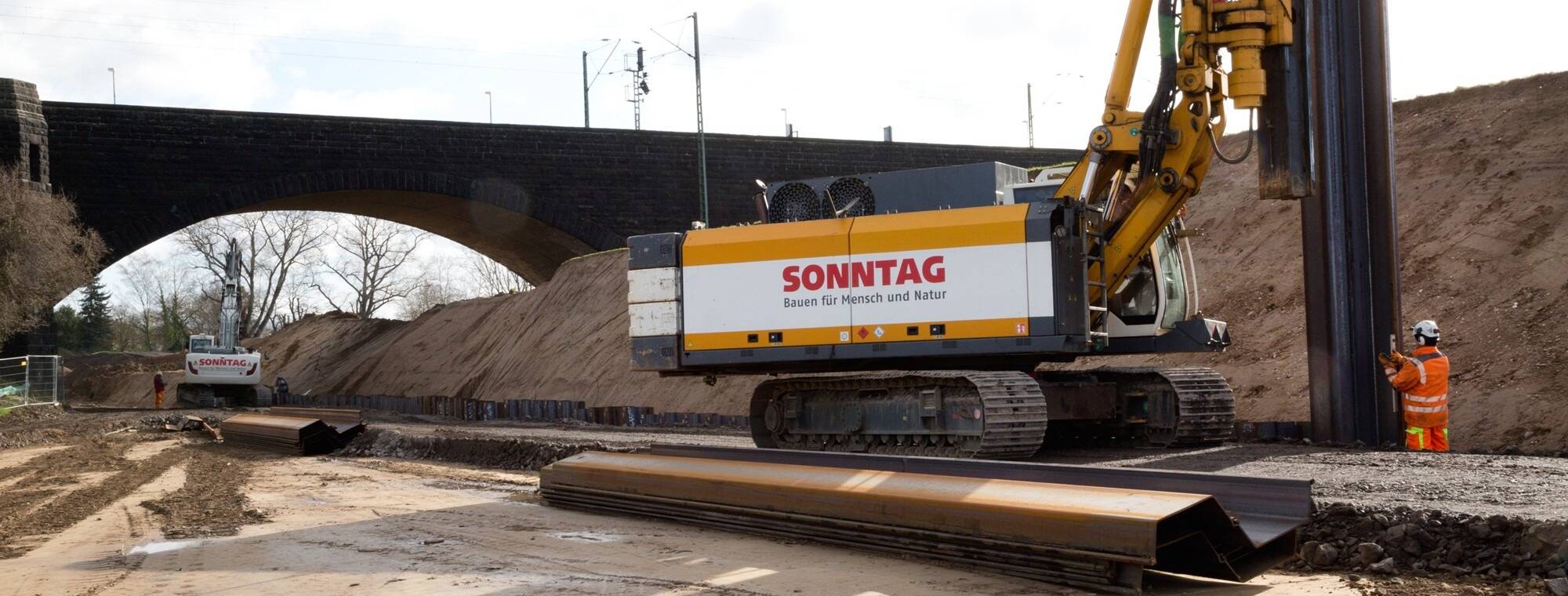
Our vibratory rammers are today equipped without resonance start and stop, allowing for damage-free work even in vibration-sensitive soil and construction conditions. If necessary, relaxation drilling is carried out with continuous screws. Depending on the soil type and requirements, the sheet pile trace is pressed when pulling the sheet piles to exclude subsequent settlements.
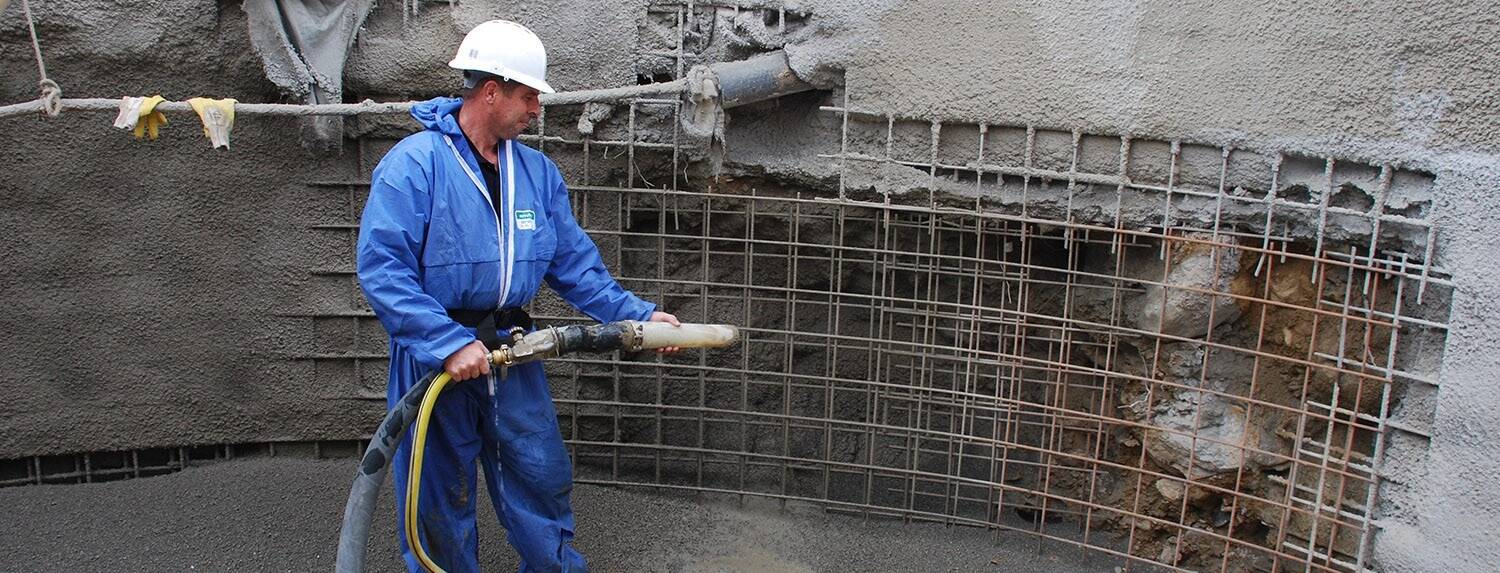
For round or elliptical excavations, the shotcrete construction method has proven effective. Key advantages include the absolutely vibration-free and settlement-free installation of the structure, as well as the possibility to leave out or integrate supply lines or other foreign bodies protruding into the excavation.
We have been using linear shoring primarily in urban sewer construction since 1996 for trench depths of up to approximately 6.0 m. The difference from conventional sliding rail shoring is that the steel shoring plates or beam chambers are lowered almost without constraint. This nearly eliminates the otherwise unavoidable settlements near the excavation. For underground structures, the shoring can be used as external formwork, allowing for the omission of an external working space.
Pumping stations, shafts, and chamber structures are often constructed economically using the caisson method. The structures – either cast and concreted on-site or assembled from precast parts – are initially built without a base slab. To allow for better sliding, a cutting edge is formed at the end of the caisson. We then excavate the bottom in the base – possibly underwater, causing the pumping station, shaft, or chamber structure to sink into the ground.
After reaching the target depth, the base slab is concreted. If the structure is in groundwater, a groundwater concrete seal must be placed underwater beforehand.